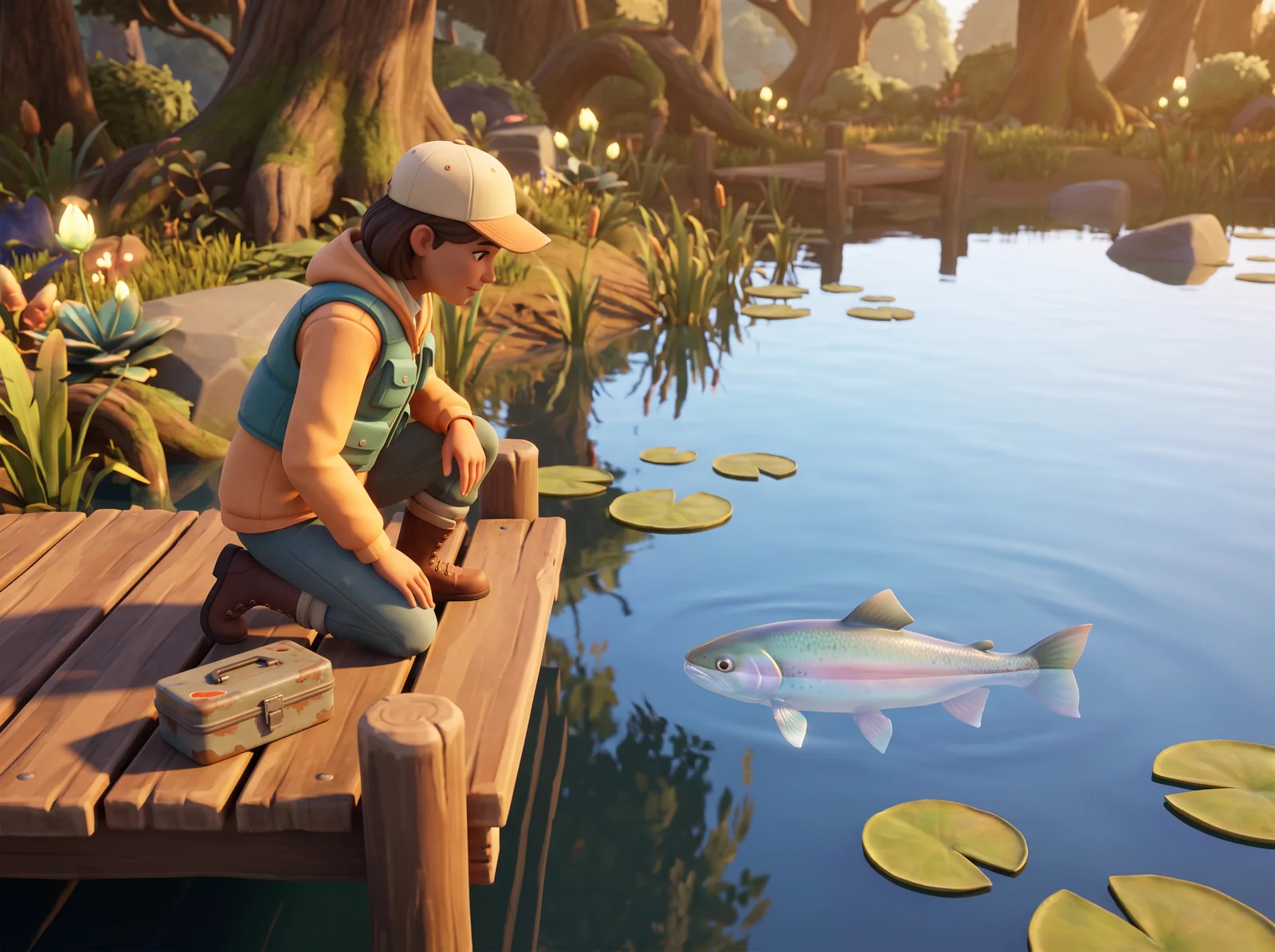
The lagoon was so still that every lily pad seemed to have a twin. Mira first saw the fish as a pale line under the surface, then saw another just above it, travelling in the opposite direction.
A waterline with two answers
From the old dock, the fish looked almost silver. Its top fin caught the sun like a small mirror, and the reflection on the surface made it impossible to tell what was moving and what was merely copied. Mira sat down, set the rod beside her and watched.
The reflected fish kept perfect time. The real one did not. Every few seconds it stopped to examine a dark patch of weed. That was the clue: water can repeat an image, but it cannot repeat a decision.
The cast that stayed small
Mira clipped on a soft grub and tossed it beyond the weed patch. The lure settled with hardly a ripple. The reflected fish ignored it. The real fish moved closer, slow enough to make every second visible.
When the line ticked, Mira did not strike hard. She lifted the rod and let the fish travel along the dock before turning it back into open water. It was not huge, but its fin flashed every colour the afternoon had left on the lagoon.
No trophy needed
Mira watched the fish fade into the lily shadows after the release. The surface became a mirror again, but now it only held sky, dock and a small boat-shaped cloud.
She wrote one line in the field log: “When two things look alike, wait for the one that chooses.” It was a good enough rule for fish, maps and almost everything else.
“Reflections are useful. They are not instructions.”
Back at the map table, Mira added one small mark to the page, dried the gear and left the next question for another morning. The Driftglass Delta was never short of clues. It only asked that people make space to notice them.
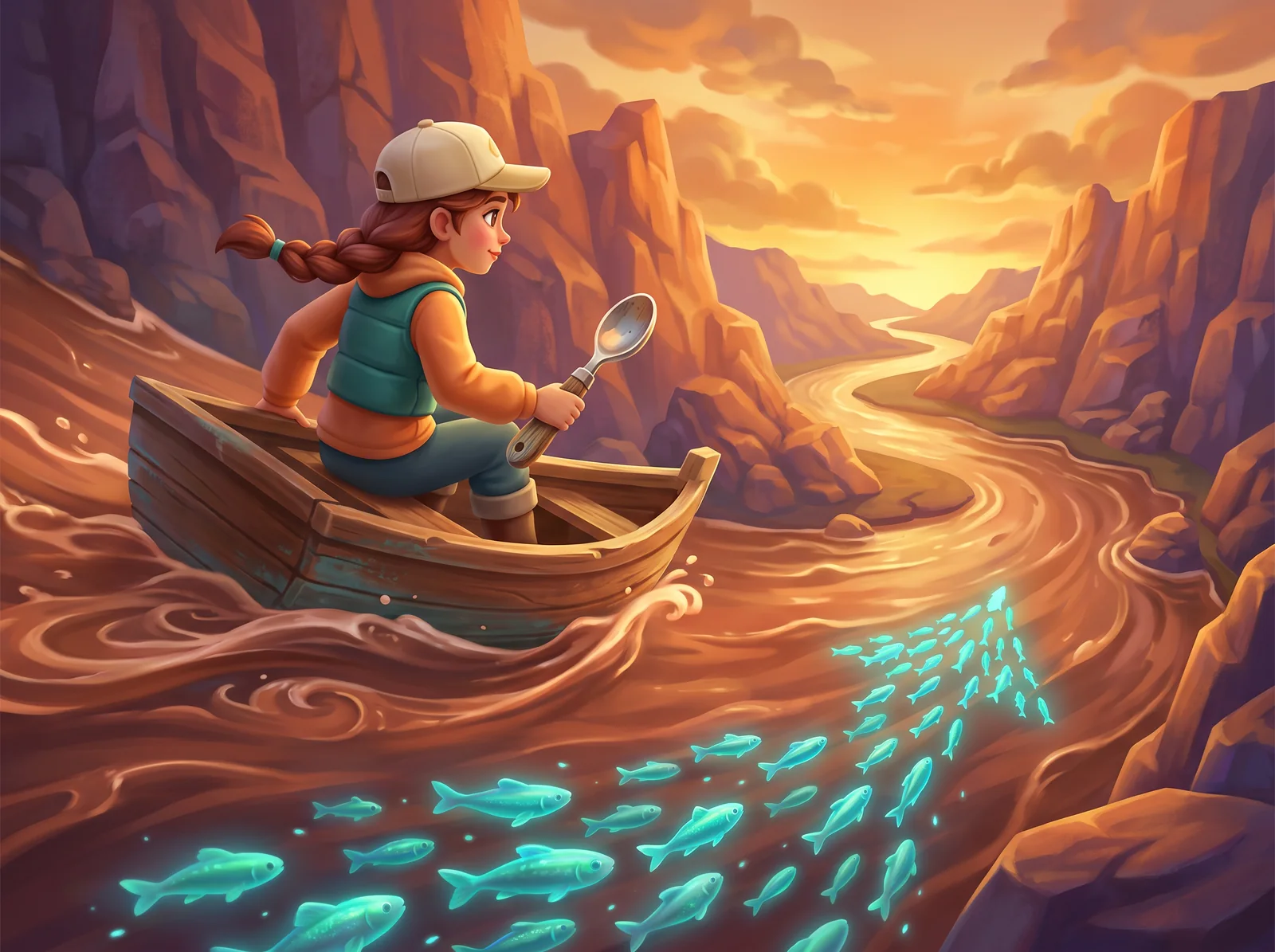
The Copper Current
A sunset current turned the whole river bronze, and only a handmade spoon could read its shape.
Follow the next bend →